


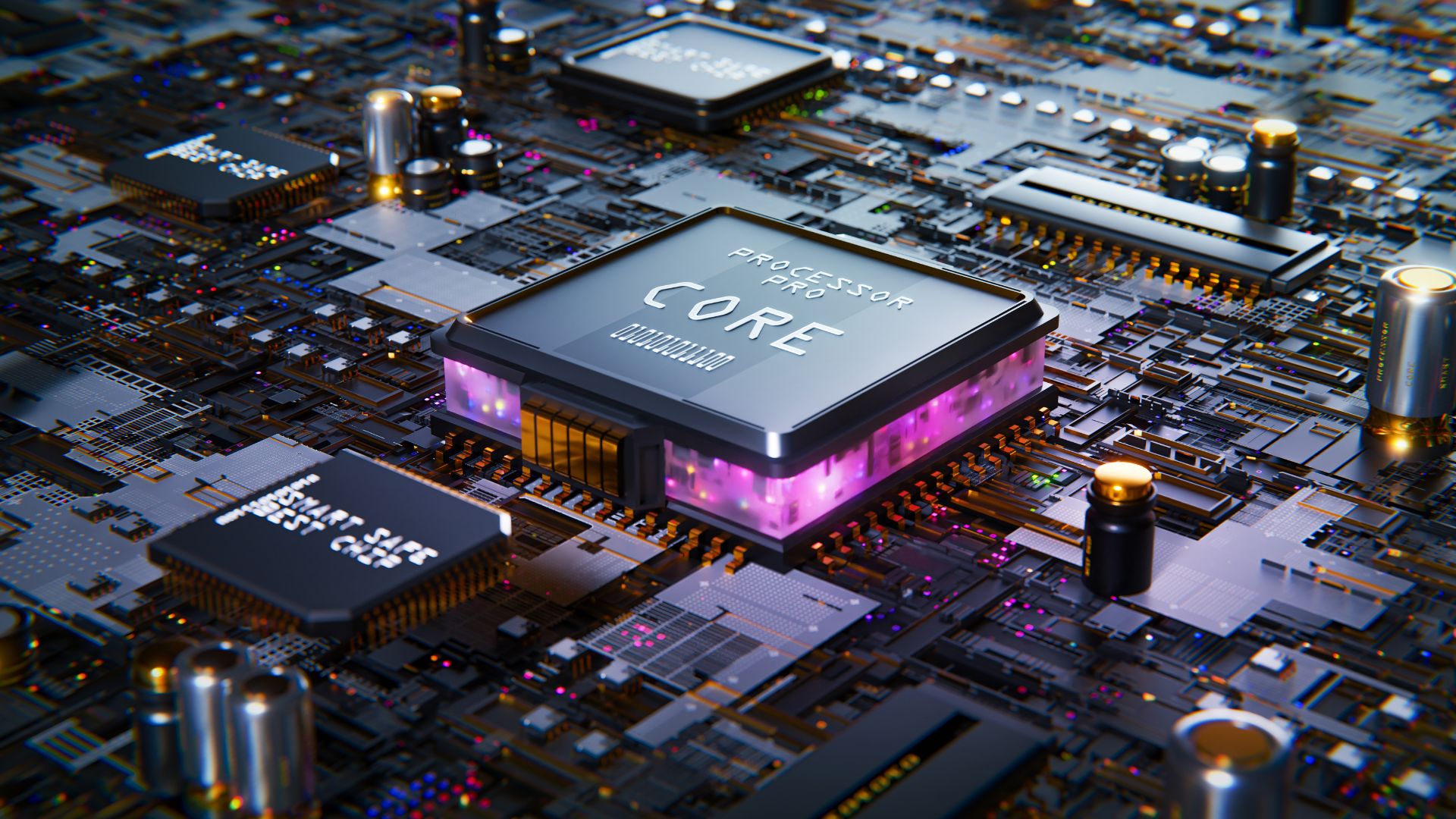
The current computing is powered by Graphics Processing Units. They work with complicated pictorials promptly. Frames are smooth due to the use of GPUs by gamers. Video edits are used by the content creators. Models are trained by AI specialists at the speed of GPUs. Data crunchers are number crunchers. That is why, GPUs promote invention at all.
Stability matters greatly. Unstable GPUs crash systems. They cause lost work. Decreased performance negatively affects deadlines. Reliability is guaranteed by testing. It spots issues early. In this way, frustration among users is prevented. A GPU stress test is a test that stresses out the hardware. It simulates heavy loads. Software runs intense tasks. It examines stamina in the long term. To give opportunities, it is a phantom the protracted gaming hours.
The developments in 2026 make the needs faster. The Rubin architecture of NVIDIA enhances AI. MI400 series by AMD improves rendering. VR demands higher fidelity. Ray tracing is used in next generation games. This leads to the necessity of testing. Users verify new hardware. They are safe in maximizing overclocks. Additionally, practitioners also deliver their best. This paper discusses the best tools. It guides safe practices. It also singles out future trends in 2026.
What is a GPU Stress Test?
A graphics card stress test causes a full load of the graphics card. It conducts hardcore simulations. The objective checks being put to the test. It exposes shortcomings in a short time. As an example, it eliminates crashes as it is used.
Benchmark tests are also very different. Peak speed is measured using benchmarks. They score single runs. Stress tests endure hours. They focus on consistency. As such, long=term reliability is proven by stress tests. Some of the important parameters are temperature. High heat signals problems. Speed of clock fluctuates with load. It shows throttling. Peaks of power usage. Stability does not have artifacts or freezes.
Signs demand testing now. Games stutter unexpectedly. Renders fail midway. Fans roar loudly. Blue screens result due to overclocks. New hardware as well must be validated. Users notice these clues. They are proactive in averting harm. Nevertheless, tests should be careful. They generate intense heat. Cooling Adequate cooling prevents damage. Concisely, stress tests instill confidence. They guarantee that GPUs do not malfunction.
Why You should Stress Test Your GPU.
First valid validation is required in overclocking. Users push clocks higher. They seek extra frames. Stress tests confirm safety. They scoop unsteady reinforcements precipitately. Therefore, crashes stay rare. Hardware failures hide well. It is sensitive defects that appear at load. Tests expose memory errors. They disclose coil whine problems. As such, users change damaged components in time.
A high-end work demands stability. Players act in 4K ray-traced games. Renderers process 8K videos. Overnight jobs are conducted by AI trainers. Unstable GPUs halt progress. In that way, tests ensure efficient working. The performance of cooling should be monitored. Airflow varies by case. Liquid setups demand checks. The stress tests are accurate in the measurement of temps. They highlight fan failures. As an example, throttling is caused by poor cooling.
In addition, frequent examinations prolong life. They spot degradation signs. Users change settings in a prudent manner. Furthermore, upgrades are benchmarked by pros. They compare the previous state with the following one. On the whole, testing creates powerful structures.
Best Functionalities to find in GPU Stress Testing Software.
Instant heat monitoring tracks a temperature in real-time. There are core and hotspots sensors. Alerts warn of dangers. Thus, the users come in quickly. This feature saves hardware.
Options of stress intensity are variable. There are light or brutal modes chosen by the users. Duration provisions are in minutes or hours. As an example, short bursts test bursts. Long runs mimic marathons. The capabilities of benchmarking provide scores. They compare against peers. Graphs show frame rates. In this way, the users will estimate improvements clearly.
Cross-brands are very broad in their compatibility. NVIDIA cards run smoothly. AMD GPUs integrate fully. Intel Arc supports DirectX 12. It is also cross-platform enabled with the help of Vulkan. Flogging properties capture the information in details. Exports save CSV files. Reports report on artifacts and scores. Therefore, trends are analyzed with time.
Nonetheless, easy-to-use interfaces are glamorous. Simple menus reduce errors. Custom profiles fit needs. In short, these characteristics enable assertive testing. They transform amateurs to professionals.

Best GPU Stress Testing Tools in 2026
1. MSI Kombustor
MSI Kombustor overworks the GPUs. It makes fur balls very furious. Users launch tests easily. The interface stays simple. Pros include free access. It supports Vulkan fully. Cons do include excessive heat production. As such, keep a close eye at all times.
Special characteristics record the playing temperatures accurately. It frames the frames per second. Suitable for NVIDIA and AMD. Gamers test overclocks. Creators validate renders. As an example, it operates 30-minute loops with reduced hazards.
It also identifies the artifacts with speed. Scores help compare rigs. In the year 2026, it is updated with ray tracing stress. In this way, it is perfectly compatible with next-gen cards.
2. FurMark
FurMark burns fur shader GPUs. It emphasizes OpenGL and Vulkan. There are the standard and donut modes. Safety measures call on temp watches. Users set limits beforehand. Fast stability monitoring.
Power draws are explained at some detail. It describes clocks dynamically. Pros are designed with a lightweight design. Cons demand short runs only. Nonetheless, it is also good in scanning artifacts.
Overclockers depend on it in order to be used. Burn-in tests new cards. Also it goes hand in hand with surveillance applications. In 2026, Vulkan 2.0 support shines. Therefore, it manages the Blackwell GPUs effectively.
3. 3DMark Stress Test (Time Spy, Fire Strike)
3DMark is a combination of stress and benchmarks. Time Spy tests DirectX 12. Fire Strike handles DX11 loads. Loops run 20 iterations. It scores percentages of stability. Gamers are fond of detailed reports.
Importance grows for pros. It is a close simulation of actual games. Bottlenecks are uncovered in frame times. As such, optimizations emerge accordingly.
Cross-platform scores are viewed as pros. Full access to the content of the cons demands purchase. Nonetheless, free versions are enough basics. Besides this, 2026 updates introduce workloads of AI. Therefore, the VR users are helped a lot.
Suitable for high-end rigs. It pushes RTX 50-series limits. In addition, it has pros who use it in certifications.
4. AIDA64 Extreme
AIDA64 stresses whole systems. GPU modules use OpenCL. It tests memory and shaders. Custom suites fit needs. Live data is indicated on monitoring overlays.
Durations can be easily customized by the users. Curves are chosen on the graphical outputs. Numerical logs can be exported in a clean manner. Thus, it is easy to analyze.
Pros address provision of CPU-GPU interactions. The emphasis of cons is less on graphics in purity. But it incorporates MSI Afterburner very well. To overlockers, it justifies combinations.
In 2026, AI detection adds value. It flags neural net strains. Besides, VR compatibility adds tests. In this way, it is versatile to creators.
5. OSL (OverStack Checker Tool)
OCCT focuses on fast setups that are overclocked. Shader and compute tests run on it. Stability checks last hours. Errors are represented as graphical outputs. Voltages are recorded in numerical data. Analysis spots power spikes. It stops on failure automatically. Advantages will be free full version. Cons generate extreme loads.
Attractive to those who like tweaking. It confirms undervolts too. As one such example, it emphasizes AMD RDNA4 cards. As such crashes remain predictable. Besides, 2026 add-on builds incorporate tensor cores. In this way, AI overclocks are vetted. Moreover, multi-GPU is also supported, as well as SLI.
6. Heaven & Valley Benchmarks
Unigine Heaven is the rendering of flying scenes. Valley discusses idyllic existences. Both are tessellated greatly. They report FPS averages. Temps log in real-time. Artifacts trigger warnings.
Synthetic tests are rendering oriented. Heaven suits DX11 fans. Valley adds DX12 paths. Pros offer free downloads. Cons run longer than rivals.
Perfect to use in visual tests. Gamers test anti-aliasing. Creators validate 4K outputs. As well, 2026 versions also permit path tracing. Thus, next-gen GPUs shine.
Nevertheless, always use monitors. To conclude, they provide stressful immersion.
7. GPU-Z (Monitoring Tool)
GPU-Z monitors during tests. It reads sensors accurately. Clocks, temperatures and usage: live. Not a stressor itself. Nevertheless, it complements other ones. Users log sessions easily. Accuracy is ensured by sensor validation. Pros include tiny footprint. Cons lack stress modes.
Essential for all tests. It tracks fan speeds too. An example is that overclockers monitor voltages. As such, decisions are made on facts. It supports Rubin architecture in 2026. Thus, new cards get full reads. Also, AI measures create details.
8. New 2026 Tools
The new technologies focus on AI and VR. Unigine Superposition 2026 modifications. It lays emphasis on neural rendering. VR experiences represent headsets in totality. Users test latency spikes.
NVIDIA HPC-Benchmarks become more common. They push tensor cores hard. Ideal for MI400 rivals. Pros include CLI options. Cons need CUDA installs.
Geekbench AI supports the use of GPU loads. It benchmarks ML models. Thus, it is utilized by data scientists. Also, upscaling is tested by NSS of Arm. These tools evolve fast. They fit Rubin and RDNA5. Besides, open-source forks emerge. Communities thus create in a free manner.
How to Safely Stress Test Your GPU
Begin with preparing steps. Update drivers fully. Install surveillance software. Check case airflow first. Thus, baselines are setting up. Watch the temperature restrictions closely. NVIDIA caps at 83°C. AMD allows 95°C. Alerts set at 80°C. Fans ramp up automatically. Thus, overheating stays rare.
Wise avoidance of the long-term harm. Limit set at 30 minutes at first. Cool down between sessions. Use stock clocks first. On an example, overclocks are tested slowly. Dependable cooling schemes are important. Add case fans if needed. Liquid coolers handle peaks. Nonetheless, dust frequently. As a result, there is better efficiency.
Best practices of overclocks comprise steps. Increase 50MHz increments. Retest each change. Log results meticulously. Moreover, balance undervoltage to follow. Warning signs demand stops. Crashes halt immediately. Artifacts fill screens. Temps exceed 90°C. Fans scream unusually. Therefore, power off safely.
Conclusively, safe means long life. Peak performance is experienced without concerns by the users.
GPU Stress Test Results Interpretation.
There are temperature norms that govern activities. Below 70C translates to cold all right. 70 -85C to precise twitches. Over 85°C demands fixes. Thus, modify fans as quickly as possible.
Unsteadiness is manifested through crashes. Freezes associate with power problems. Addicts indicate deformed memory. Families which have low scores on stability are early warning. Thus, dial back overclocks. The outcomes maximize the performance intelligently. High FPS with low temps win. Bottlenecks can be seen through throttling. Tweaking of voltages is done by users.
The problems with hardware appear evident. Regular failures indicate endorsements. crazy clocks newsman errors. As an example, update software corrects a lot of them. Besides, compare against baselines. Olds should be underperformed by new ones. Drops signal degradation. Moreover, post share ratings.
All in all, decisions are empowered by results. They turn data into upgrades. As a result, systems operate smooth.
Mistakes when Stress Testing the GPU.
Temperature monitoring is not highly followed by the users. They run blind. Heat builds silently. Pursuits are followed by crashes. As such, sensors should always be observed.
Tests run too long or short. Marathons overheat parts. Quickies miss flaws. Balance durations wisely. An example of such as time is 15 minutes suffices. Over clocking dispenses with testing. Boosts seem fine initially. Failures hit during games. Thus, validate changes first.
Software which is outdated brings about inaccuracies. Old versions miss APIs. Readings are lower in the case of new cards. Update tools regularly. Do not forget cooling upgrades though. The stock arrangements fail. Add heatsinks proactively. Summing up, these pitfalls should be avoided. Tests stay effective.
Conclusion
In 2026, GPU stressing is the best. Developments put the boundaries to a new level. Experts in the hospitality industry enjoy stability. Gamers avoid lags. Creators meet deadlines. Pros deliver quality. Regular tests build habits. Schedule monthly checks. New hardware requires runs at this moment. Thus there are minimal issues. Final tips combine tools. Monitor functioning in combination with stressors. Hardware precaution such as cleaning matter. Optimize for longevity.
Moreover, stay updated. Communities share insights. Besides, backups avoid losses. In this way, GPUs do their best at all times.






Leave a Reply